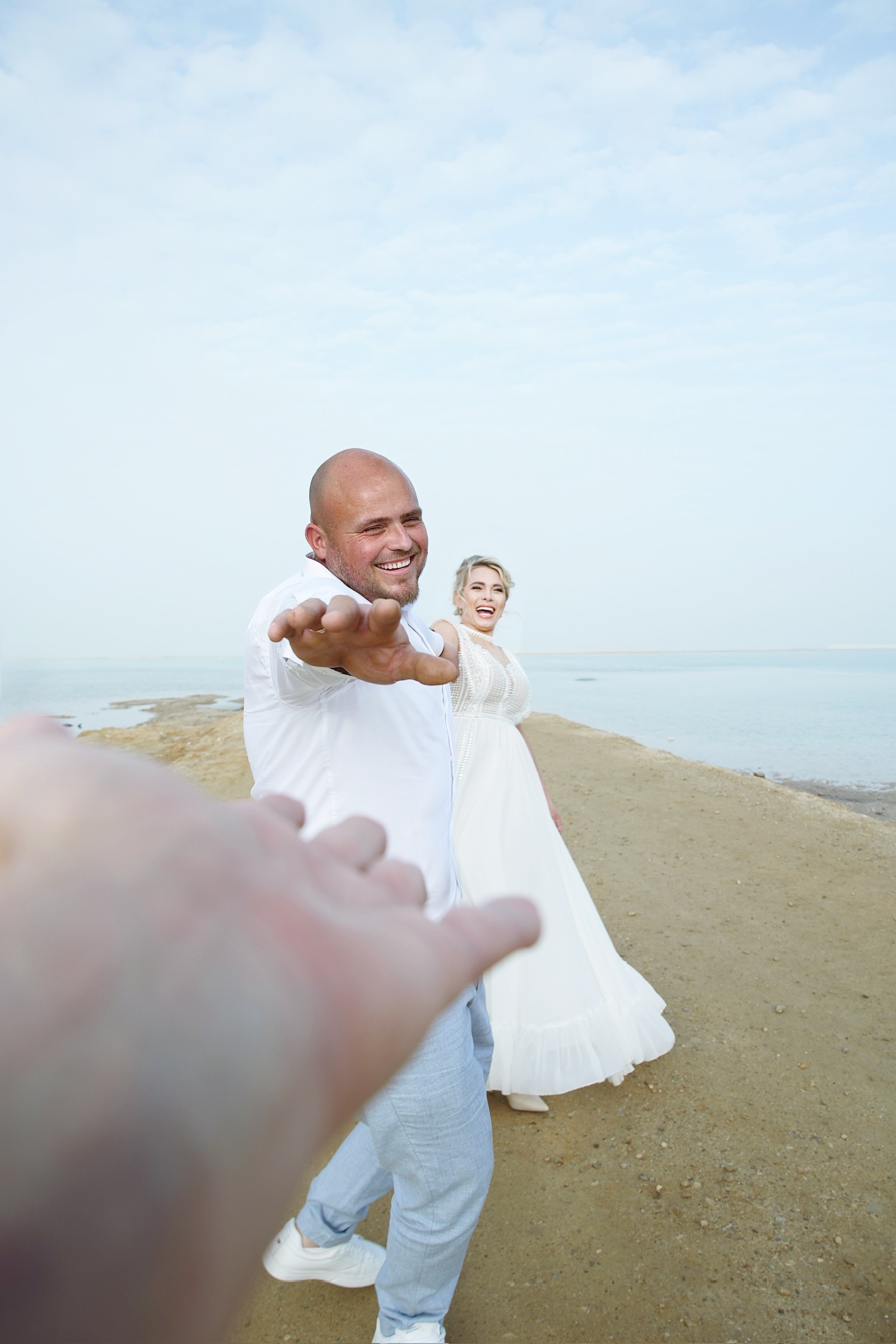
How an elopement differs from a traditional wedding
The real difference isn't the number of guests but who the day is built for. A traditional wedding is organised so that all the guests have a good time: seating, a menu for a hundred, banquet timing, dozens of supplier arrangements. An elopement is built around the couple: a sunset by the sea, a wine ceremony, letters to each other to be opened a year later.
| Traditional (100+ guests) | Elopement | |
|---|---|---|
| Planning | Months of coordination with suppliers | The curator handles logistics; you only approve what's about you |
| Budget in Israel | Easily €20,000–30,000, mostly banquet and venue | €5,500–10,500, almost all on your experience |
| The day | The couple "hosts": photos with everyone, toasts | The whole day revolves around the two of you |
Many couples do both: an intimate ceremony for two in Israel or abroad, followed by a separate celebration with family at home.
How the ceremony works
You write the words of the ceremony yourselves — or together with the officiant, who knows the place and its story. No memorised script: only what has meaning for you. In Boutique Wedding the ceremony is led by someone who has been with you throughout those days, not a stranger hired for an hour.
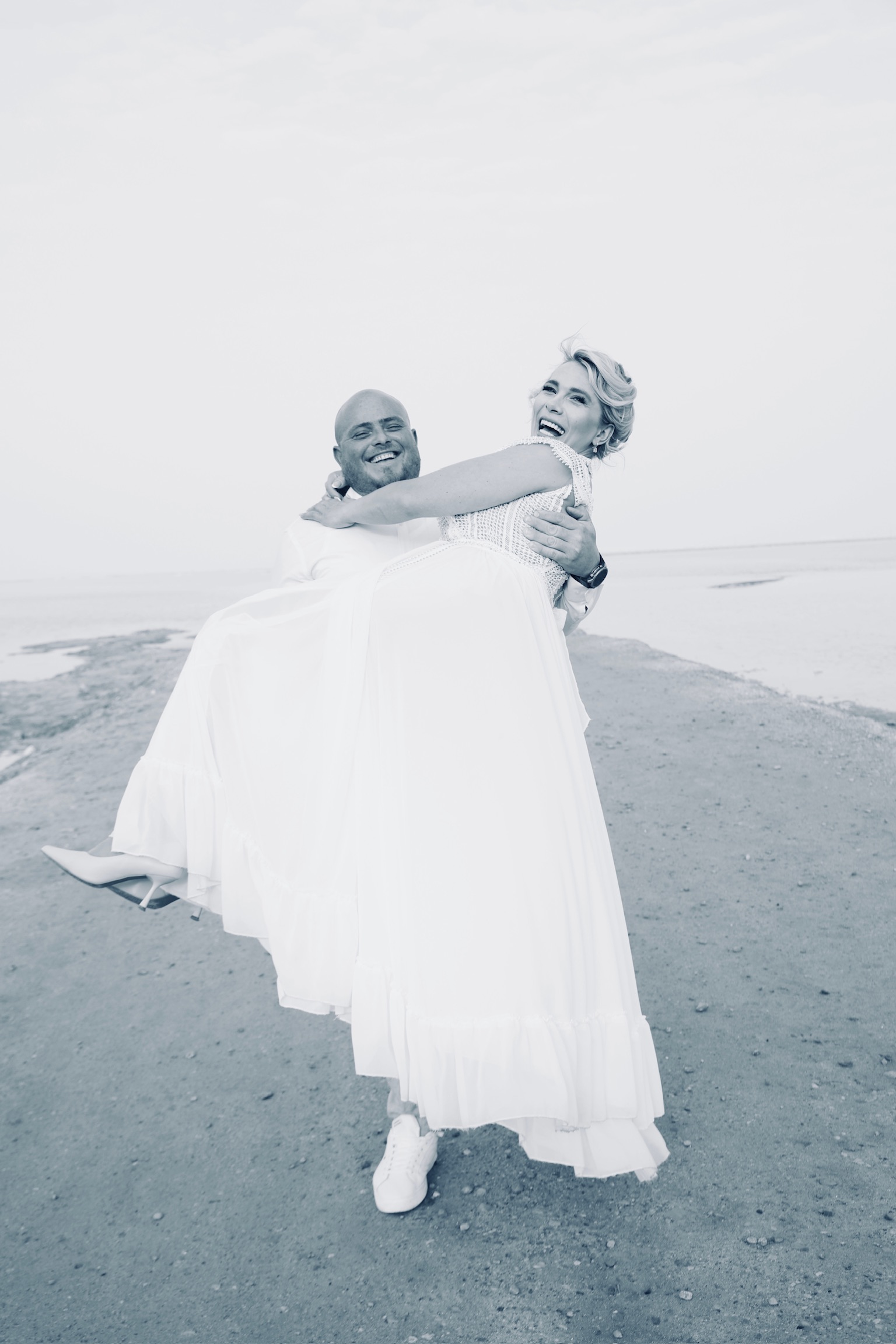
Formats and prices
The price already includes styling, makeup, photographer, curator and programme — not just a venue.
- Mini — €5,500, two days. Trial makeup and hair, ceremony rehearsal, romantic photoshoot, wedding-dress shoot, the ceremony, a sunset session. The curator is personally with you throughout.
- Mid — €8,500, three days. Everything in Mini plus vinotherapy, master classes, a handmade wedding album, dinner by the water and an advent calendar for your first year of marriage. The most popular format.
- Maxi — €10,500, three days. Everything in Mid plus a boudoir shoot, a first-dance rehearsal, a photography master class for the groom and a fifty-year time capsule.
Add-ons
- First-year advent calendar — €800 (not included in Mini)
- Time capsule — €1,500
- Live music — €450
- Decor — from €150
- Videographer — €1,000
Flights and accommodation are not included. More on choosing between formats in "Mini, Mid or Maxi: how to choose", and what happens each day in "The three-day wedding, hour by hour".
Payment
A 30% deposit secures the dates, 40% is due a month before the wedding and the remaining 30% on the ceremony day. Changing the date is free if done at least 30 days ahead; force majeure (weather, illness, travel restrictions) is covered without penalty.
Is a symbolic ceremony legal in Israel?
Israel has no civil marriage in the usual secular sense — marriages are registered through religious institutions. That's why many couples, especially secular and interfaith ones, choose a symbolic ceremony in Israel and handle the official registration separately.
A symbolic ceremony creates the moment itself — the words, the ritual, the atmosphere — but it is not a state registration of marriage. Registration routes depend on the couple's citizenship and religion: through your country's consulate, a civil marriage abroad (Cyprus, for example, is a popular option for couples living in Israel) or other routes.
Boutique Wedding specialises in the ceremony itself and the experience of those days. We recommend discussing legal registration in advance with a lawyer or your consulate, so it's settled before the ceremony.
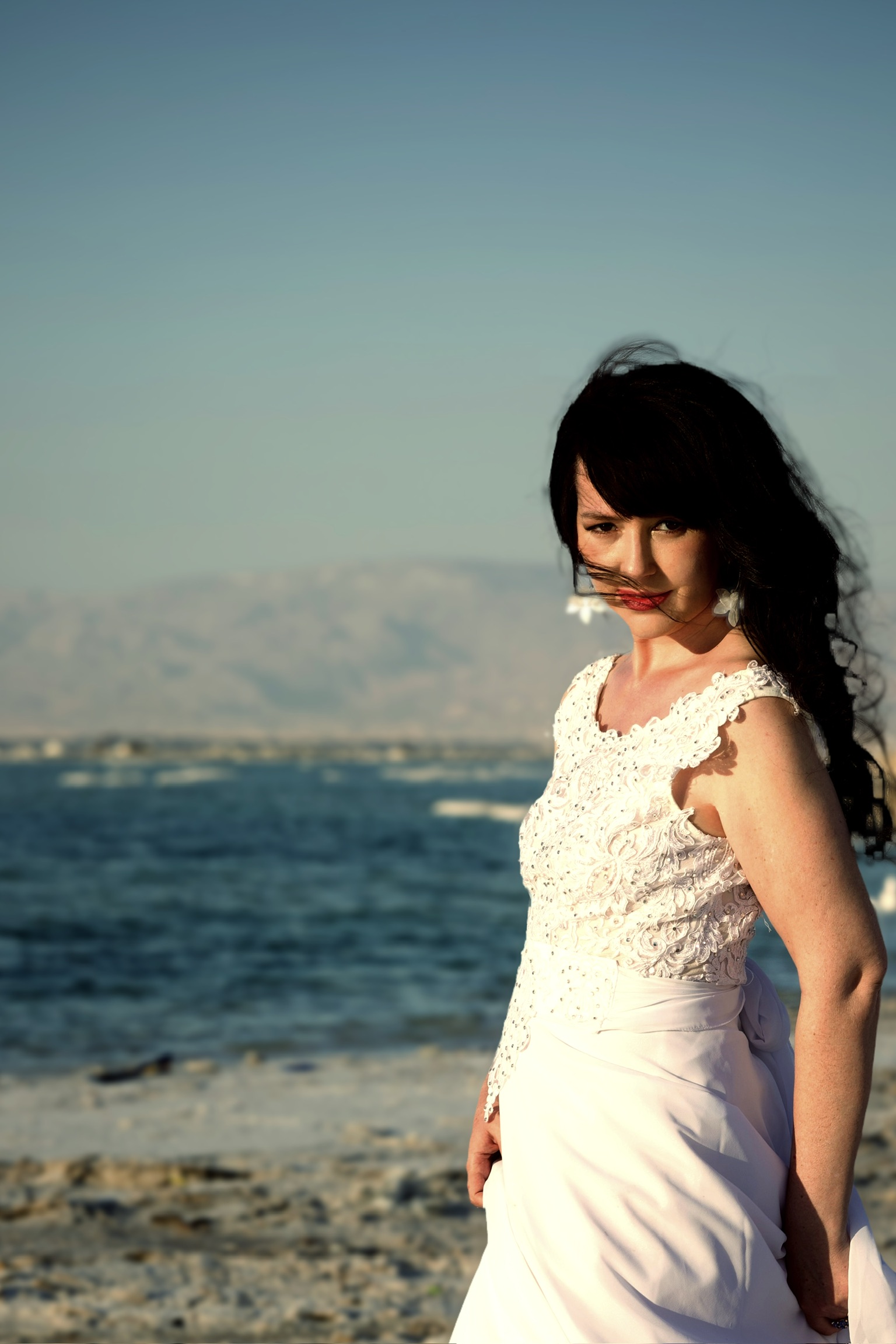
The best season for a wedding in Israel
- Spring and autumn (March–May, September–November) — the most comfortable choice for almost any location: mild temperatures, less humidity, steady light.
- Summer — good for Tel Aviv and the coast (the sea breeze softens the heat), poor for the Dead Sea and the Negev, where it can top 40°C by noon; ceremonies there are planned strictly for sunset.
- Winter — mild but rainy. Jerusalem and the hills are cool in the evening; the coast and the south work well with a rain backup plan.
Where exactly to hold the ceremony — see "Wedding locations in Israel".
Which language for the ceremony?
When a couple speaks different languages, a ceremony can easily turn into a string of translations. Boutique Wedding works in three languages from the start — Russian, Hebrew and English — so that problem is solved in advance.
- The key words — the vows, the address to the couple — can be spoken in several languages at once, without feeling like simultaneous interpretation.
- In personal rituals (the time capsule, the advent calendar) you write to each other in your own languages, with no go-between.
- For a couple where one speaks Russian and the other Hebrew or English, an elopement removes the hardest part — fitting the programme to two cultures and two sets of guests.
If you need another language, translation can be arranged in advance.
Where to start
- Talk about what matters to you in this day.
- Choose a format — Mini, Mid or Maxi — and a location.
- Settle registration, if you need it.
- Pay the 30% deposit and secure your dates.
Want to talk about your elopement? Tell us what matters to you — we'll suggest a format and location.
Message on WhatsApp